
Download the app by scanning the QR code or clicking the links below:

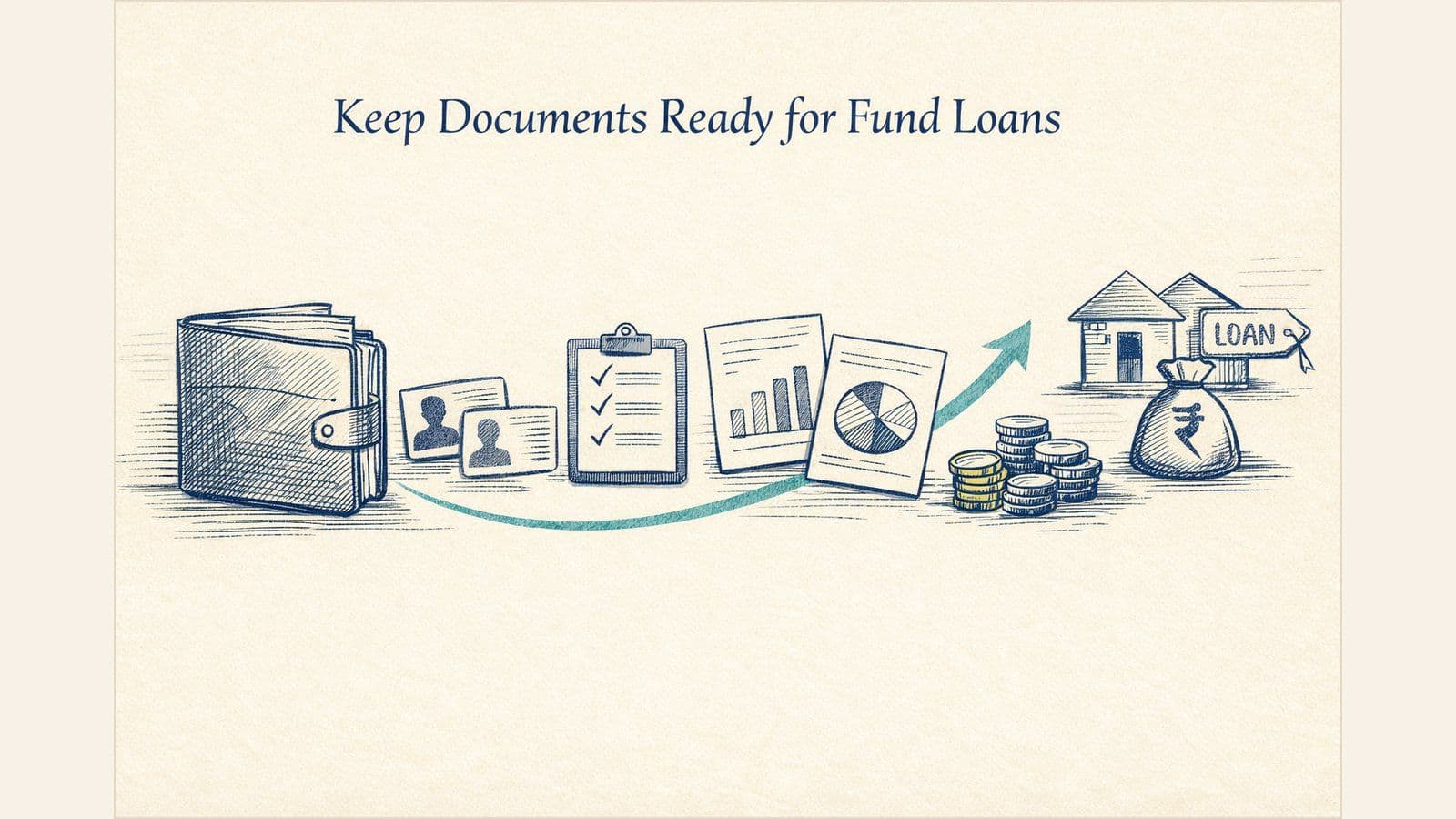
If you are considering a loan against mutual funds, the paperwork question usually comes before the rate question: what do I need to keep ready?
The short answer is that a modern loan against mutual funds is less about carrying a folder of documents and more about completing a few digital checks. You generally need identity/KYC readiness, access to your mutual fund holdings, bank or auto-pay setup, and the ability to complete the pledge and agreement flow.
That matters because the real benefit is not just getting a loan. It is getting liquidity without selling the mutual funds you built over time.
Key Takeaways
- A loan against mutual funds usually depends on KYC, holdings verification, pledge setup, bank or auto-pay setup, and agreement signing.
- The exact requirement can vary by lender and eligibility, so avoid assuming every case uses the same checklist.
- A digital LAMF flow can be simpler than selling investments or applying for a generic personal loan, especially if your mutual fund records are ready.
For most investors, the practical checklist starts with three things: your identity, your mutual fund portfolio, and your repayment setup.
You should be ready to complete KYC, verify or fetch your holdings, set up the required mandate or auto-pay instruction, and sign the loan agreement digitally. In Yenmo’s app-led flow, the broad process includes KYC, pledge setup, auto-pay, and agreement signing inside the app.
The exact screens and checks can vary based on your portfolio and lending partner. But the direction is clear: the process is designed around digital verification, not branch visits and physical paperwork.
If you are still learning the category, Yenmo’s complete guide to loans against mutual funds is a useful starting point.
Usually, the better question is whether your holdings can be verified digitally.
Many investors think they need to download every statement, print forms, and manually prove ownership. In an app-led LAMF flow, the important step is connecting or verifying the holdings that can be pledged, not producing paperwork for its own sake.
That is why your mutual fund records should be clean and accessible. If your folios, demat holdings, or account details are outdated, the borrowing process can feel slower even if the loan product itself is digital.
The smoother your investment records are, the easier it becomes to treat your portfolio as a source of liquidity without redeeming it.
You should expect checks that confirm who you are, what you own, and how the repayment arrangement will work.
Common digital steps in this kind of flow may include KYC, DigiLocker-style document access where required, bank verification, mandate or auto-pay setup, pledge confirmation through the relevant mutual fund infrastructure, and agreement signing.
Yenmo’s trust layer includes names investors may already recognise, such as CAMS, KFin, NSDL, and DigiLocker, along with lending partners including Bajaj Finance, Tata Capital, and DSP Finance. These signals matter because a loan against mutual funds is not only a credit decision. It is also an operational trust decision.
The point is not to memorise every back-end step. The point is to know that the process should make ownership, pledge, and repayment terms clear before you proceed.
When you redeem mutual funds, you turn investments into cash. That can feel simple, but it may interrupt compounding, trigger tax or exit-load considerations, and force you out of the market when you may still want to stay invested.
A loan against mutual funds solves a different problem. It lets you pledge eligible holdings and borrow against them, so the portfolio can remain invested while you handle the cash need.
That does not mean borrowing is always the right answer. It means the document and setup process should be compared against the cost of selling too early, not against an imaginary zero-friction option.
You can also use Yenmo’s loan against mutual fund calculator vs redemption calculator to think through the cost of borrowing versus redeeming.
A digital process can still slow down if your records are not ready.
Watch for these common friction points:
None of this means the process is broken. It simply means that a pledge-backed loan depends on clean ownership and repayment information.
If you already know you may need liquidity, it is usually better to understand eligibility before the need becomes stressful.
That does not mean you should borrow without a reason. It means checking eligibility can help you know whether your portfolio can support a credit line before you are forced into a rushed redemption.
This is one reason Yenmo’s “check eligibility” flow is useful. It helps you understand the borrowing route while your investments are still intact, instead of waiting until selling feels like the only option.
Requirements can vary by lender and eligibility. Because the loan is backed by eligible mutual fund holdings, the portfolio and pledge process are central, but you should verify the exact requirement in the app before relying on any generic checklist.
A modern LAMF flow is designed to be digital, but exact document access and verification steps can vary. Expect KYC, holdings verification, auto-pay setup, pledge confirmation, and agreement signing rather than a traditional branch-heavy process.
It may be possible depending on how the holdings are recorded and whether they are eligible for pledge. The practical step is to check eligibility rather than assume all holdings will be treated the same way.
Keep your KYC, phone/email records, bank details, and mutual fund holding records up to date. Clean records make a digital pledge-backed loan easier to process.
A loan against mutual funds should not feel like a paperwork maze.
The practical checklist is simple: be KYC-ready, make sure your holdings can be verified, complete the pledge flow, set up repayment instructions, and sign the agreement clearly. The exact details may vary by lender, but the overall job is the same: unlock liquidity without forcing a sale of your investments.
If you need cash but still want your mutual funds working for you, check your eligibility with Yenmo and compare that option before redeeming units too early.