
Download the app by scanning the QR code or clicking the links below:


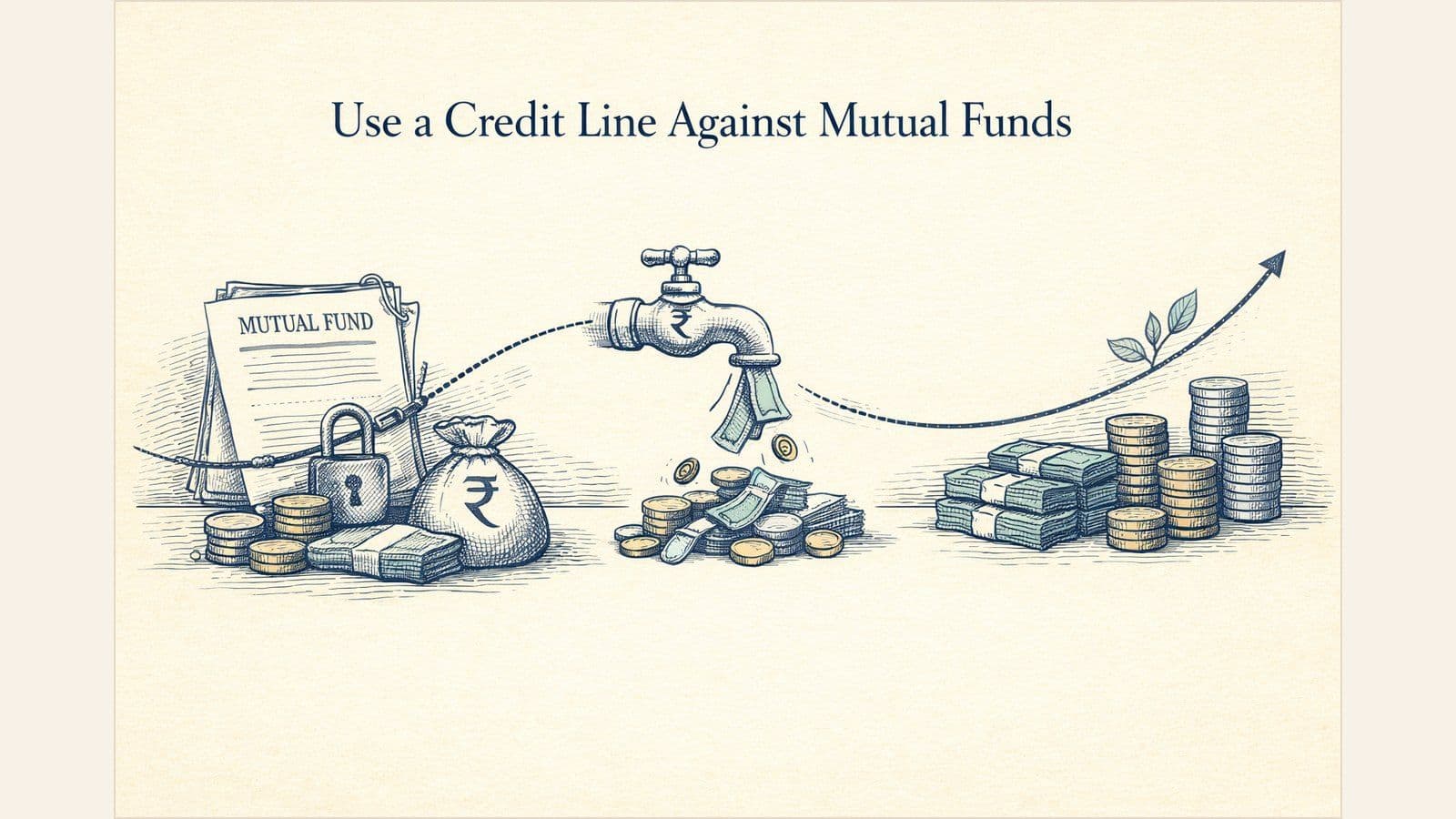
A credit-line style loan against mutual funds gives you an approved borrowing limit, but you do not have to use the full amount. You can withdraw only what you need, and interest is charged only on the amount you actually use.
That is the main difference between a flexible loan against mutual funds and many lump-sum borrowing options. The goal is not to push you to borrow more. The goal is to give you access to liquidity while your mutual funds stay invested.
A credit-line style loan against mutual funds is a borrowing arrangement where your pledged mutual funds support an approved limit. You can then draw from that limit as needed.
For example, if your eligible limit is ₹1,00,000, you do not have to withdraw ₹1,00,000 on day one. You may withdraw ₹25,000 now, keep the rest unused, and draw more later if needed.
This is useful because real cash needs are often uncertain. A home repair, medical expense, business gap, or family need may not require the full eligible amount immediately. A credit line lets you avoid over-borrowing just because the limit exists.
With a lump-sum loan, the full loan amount is usually disbursed upfront. You start paying based on that borrowed amount even if you do not need all of it immediately.
With a credit-line style loan against mutual funds, the approved limit and the used amount are different. Your limit is what you are allowed to access. Your used amount is what you have actually withdrawn.
That difference can make the product more flexible. If you need only ₹30,000 today, you can use ₹30,000 instead of taking the full approved amount. The remaining limit can stay available for later, subject to portfolio value and lender rules.
The limit is access. The withdrawal is the loan you are actually using.
Interest applies only to the amount you withdraw. If you have an approved limit but do not use it, you are not paying interest on the unused portion.
This is one of the most important cost differences for investors. Suppose you are eligible for ₹1,00,000 but withdraw only ₹40,000. In a withdrawal-based structure, interest is charged on ₹40,000, not the full ₹1,00,000.
That can help you match borrowing cost to your actual cash need. Instead of selling mutual funds or taking a larger loan than required, you can use a smaller amount while keeping the rest of the line as backup.
Interest-only repayment means your regular repayment obligation is focused on interest, not a fixed EMI that includes both principal and interest. You still owe the principal you have used, but you are not forced into the same kind of monthly EMI structure that many borrowers associate with personal loans.
This can help cash flow when the need is liquidity rather than long-term consumption. You can handle the immediate cash requirement and repay or reduce the used amount when your finances allow.
Yenmo’s core offer is built around this kind of interest-only structure. It also emphasizes no foreclosure charges, no prepayment penalties, and no hidden fees, which matters if you want the freedom to repay early.
Mutual funds are long-term investments for many people. Selling them for a cash need can interrupt compounding, disturb an SIP-led plan, and create regret if the investment later recovers or grows.
A loan against mutual funds gives you another path. You can pledge funds, access liquidity, and keep the investments in place. Your mutual funds can continue earning returns while pledged, although their value can still move with the market.
The credit-line style structure adds another layer of control: you do not have to borrow more than the cash need demands.
The unused limit stays available subject to the loan terms, current pledged portfolio value, and lender rules. If your mutual fund value changes, the available limit can also change.
This is why you should treat the approved limit as a ceiling, not a spending target. Keeping part of the limit unused can give you room if markets move. It can also make it easier to manage shortfalls or unpledge part of your mutual funds later.
A useful habit is to leave roughly a 10% buffer when withdrawing, especially if your funds are market-sensitive. The buffer helps reduce the chance that normal market movement creates pressure.
Redeeming mutual funds gives you cash by selling investments. A credit-line style loan gives you cash by borrowing against investments you continue to hold.
If you no longer want the investment, redemption may be reasonable. But if you still believe in the investment and only need liquidity, borrowing can protect your long-term plan better than selling.
The difference is not just emotional. When you redeem, the sold units stop participating in future returns. When you pledge, the units can remain invested. You pay interest on what you use, but you avoid turning a cash need into a forced exit from your portfolio.
A personal loan is unsecured, so the lender does not have your mutual funds as backing. That can make the pricing and repayment structure different. Personal loans are also commonly built around EMIs.
A loan against mutual funds is secured by pledged investments. For an investor who already has eligible mutual fund holdings, that can make the borrowing structure more flexible. With Yenmo, the credit-line style format means you can withdraw only what you need and pay interest only on that used amount.
The right choice depends on your situation. If you want a fixed repayment schedule and do not want to pledge investments, a personal loan may still be considered. If you want liquidity without selling and prefer withdrawal-based interest, a loan against mutual funds may fit better.
Before withdrawing, check these points:
Yenmo helps you check eligibility across lending partners through one platform and borrow against mutual funds digitally. The setup includes app-led steps such as KYC, pledge setup, auto-pay, and agreement signing.
For the reader, the practical benefit is simple: you can access cash without redeeming mutual funds, use only the amount required, and keep your long-term investments in place.
This is why the credit-line structure matters. It supports a more measured decision than “sell investments” or “take the full loan.” You can borrow what the situation needs and keep the rest of your portfolio strategy intact.
No. In a credit-line style loan against mutual funds, interest is charged on the amount you withdraw, not the unused approved limit.
Yenmo’s core offer uses an interest-only structure rather than a mandatory EMI structure. You still need to repay the principal you use.
You may be able to withdraw more later if you have unused available limit and the pledged portfolio value supports it.
Your eligible limit can reduce. If your used amount is above the revised eligible amount, you may need to repay part of the used amount or pledge more funds.
It can be better if you need cash but want to keep your mutual funds invested. Selling may make sense if you want to exit the investment or avoid borrowing altogether.
A credit-line style loan against mutual funds gives you flexibility. You can get an approved limit, withdraw only what you need, and pay interest only on the amount used.
That structure is especially useful for investors who need cash but do not want to sell mutual funds unnecessarily. If you want liquidity while staying invested, Yenmo can help you check your eligibility and compare borrowing against redemption.
Check eligibility with Yenmo and see how much you may be able to access without selling your mutual funds.