
Download the app by scanning the QR code or clicking the links below:

If you pledge mutual funds for a loan, one practical question comes up quickly: what happens to dividends or IDCW payouts?
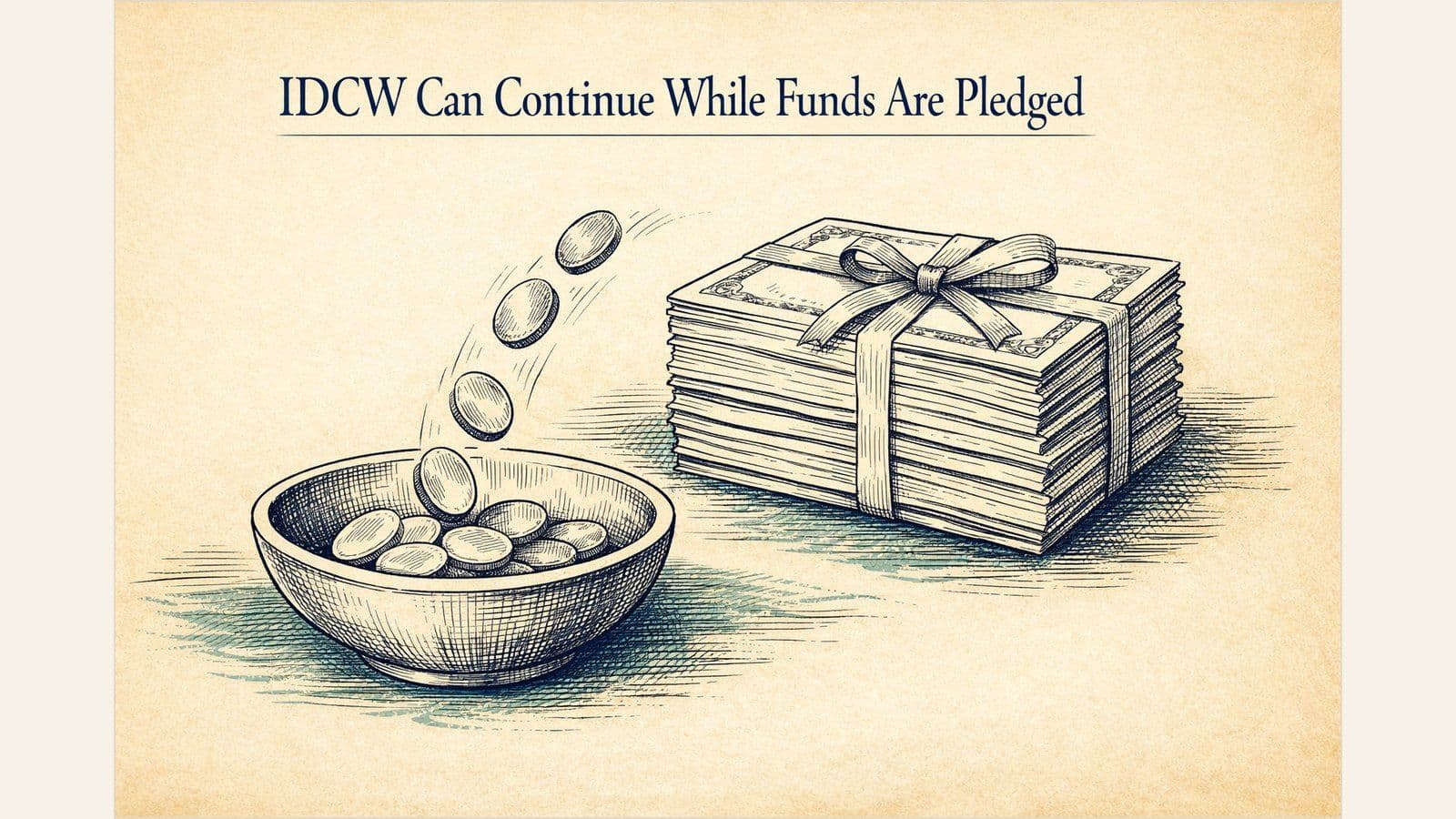
The short answer is reassuring. Pledging is different from redeeming. Your eligible mutual funds can remain invested, and Yenmo’s guidance is that dividends or IDCW payouts continue while the funds are pledged.
That does not mean nothing changes. The pledged units support the loan, so your ability to freely redeem or move them is restricted until the pledge is released. The useful distinction is simple: payouts and investment exposure can continue, but flexibility changes.
Key Takeaways
- Dividends or IDCW payouts can continue while mutual funds are pledged.
- Pledging is not the same as redeeming, so eligible funds can remain invested.
- The trade-off is access: pledged units are not as freely movable while the loan is active.
- Borrowing can be better than selling when you need cash but still want the investment to stay part of your plan.
Dividends or IDCW payouts can continue when mutual funds are pledged because the units are not being sold.
In a loan against mutual funds, the fund units act as collateral. You are using the portfolio to support a borrowing facility, not redeeming the units for cash. That is why the investment can keep participating in market movement while it supports the loan.
This distinction matters. If you redeem mutual funds, you exit those units. If you pledge them, you may be able to access liquidity while keeping the investment in place.
The key difference is that you are using the investment as collateral, not selling it.
The main change is flexibility.
Your pledged mutual funds can remain invested, but they are no longer completely free for you to transact with in the usual way. The pledged units are supporting the loan, so you should not treat them like unpledged units that can be moved or redeemed whenever you want.
That is the trade-off behind a loan against mutual funds. You may preserve investment exposure and payout continuity, but you accept restrictions while the pledge is active.
Still invested does not mean completely unrestricted.
This is why it helps to separate three ideas:
Once you separate those three, the product becomes easier to evaluate.
Payout continuity matters because it shows why pledging can be meaningfully different from redemption.
Many investors compare a loan only against the visible interest cost. That is not enough. If you sell mutual funds for a cash need, you may also lose future market participation on the units sold. Depending on the fund and holding period, taxes or exit load may also matter.
When you pledge instead, you are trying to solve the cash need without turning it into a full portfolio exit. The mutual funds can remain invested, and the payout logic can continue, while you use the borrowing facility for liquidity.
A cash need should not automatically interrupt every benefit of the investment.
That is the core reason investors consider a loan against mutual funds. The goal is not to borrow for its own sake. The goal is to avoid selling an investment you still want to hold.
If you want to compare the cost of borrowing with the cost of selling, Yenmo’s loan against mutual fund calculator vs redemption calculator can help you think through the decision.
Yes, pledged mutual funds can continue earning returns because they are not redeemed.
The value of the fund can still rise or fall with the market. That is useful when markets move in your favour, but it also means collateral value risk remains. If the portfolio falls after you have already used part of the borrowing facility, the eligible amount can reduce.
Yenmo’s guidance is that lenders generally give about 7 days to fix a shortfall if one occurs after you have drawn from the line. That can usually be done by repaying part of the outstanding amount or pledging more mutual funds.
This is why borrowing should stay measured. Leaving a buffer instead of withdrawing the full available limit can make normal market movement less stressful.
Even when the broad principle is clear, you should still check your own setup before borrowing.
Ask these questions:
A good borrowing decision should be easy to understand before you proceed. You should not have to guess how your investment will behave once it becomes collateral.
Borrowing can be better than selling when you need cash but still want your mutual funds to remain part of your long-term plan.
That can apply to many cash needs: medical expenses, home repairs, business cash-flow gaps, family needs, travel, or other situations where you need liquidity but do not necessarily want to exit the investment.
With Yenmo, eligible investors can pledge mutual funds instead of redeeming them. The facility can work like a credit line where interest is charged only on the amount withdrawn. Yenmo also highlights no hidden charges, no foreclosure charges, and no prepayment penalties in the core offer.
The point is not that borrowing is always better. The point is that selling should not be the automatic answer when the investment can still keep working for you.
Redeeming can still be the right move when repayment would be stressful, when you need full flexibility over the units, or when the fund no longer fits your goals.
A loan only helps if it remains manageable. If the cash need is open-ended or repayment is uncertain, selling may be cleaner than adding a borrowing obligation.
You should also redeem if you no longer want to own the fund. In that case, selling is not only a liquidity decision. It may be a portfolio decision.
Payout continuity is useful only when the borrowing decision itself remains comfortable.
Yenmo is built for mutual fund investors who need liquidity but do not want redemption to be the default answer.
The app-led process helps eligible investors check options, pledge mutual funds, and borrow without selling. The trust ecosystem includes CAMS, KFin, NSDL, DigiLocker, lending partners such as Bajaj Finance, Tata Capital, and DSP Finance, and Y Combinator backing.
If your main hesitation is whether your investment benefits stop after pledging, start with the core distinction: a pledge is not a sale. Your funds can remain invested, dividends or IDCW can continue, and you can still compare borrowing with redemption on the full cost.
Yes. Yenmo’s guidance is that dividends can continue while mutual funds are pledged because the units are not redeemed.
IDCW payouts can continue while mutual funds are pledged. You should still check the exact treatment for your fund and platform flow before borrowing.
Yes. Pledged mutual funds can remain invested, so their value can still move with the market.
No. You should assume pledged units are restricted while they support the loan. They generally need to be released or unpledged before you can treat them like free holdings again.
Redeem when repayment would be uncomfortable, when you need full control of the units immediately, or when the investment no longer fits your portfolio.
Dividends and IDCW payouts can continue when mutual funds are pledged because pledging is not the same as selling.
That is the investor-friendly part of a loan against mutual funds: it can help you access cash while eligible funds remain invested. The trade-off is that pledged units are restricted until the loan is settled or the pledge is released.
Before you redeem for a cash need, check your eligibility with Yenmo and compare whether pledging can solve the liquidity problem while keeping your investment plan intact.