
Download the app by scanning the QR code or clicking the links below:


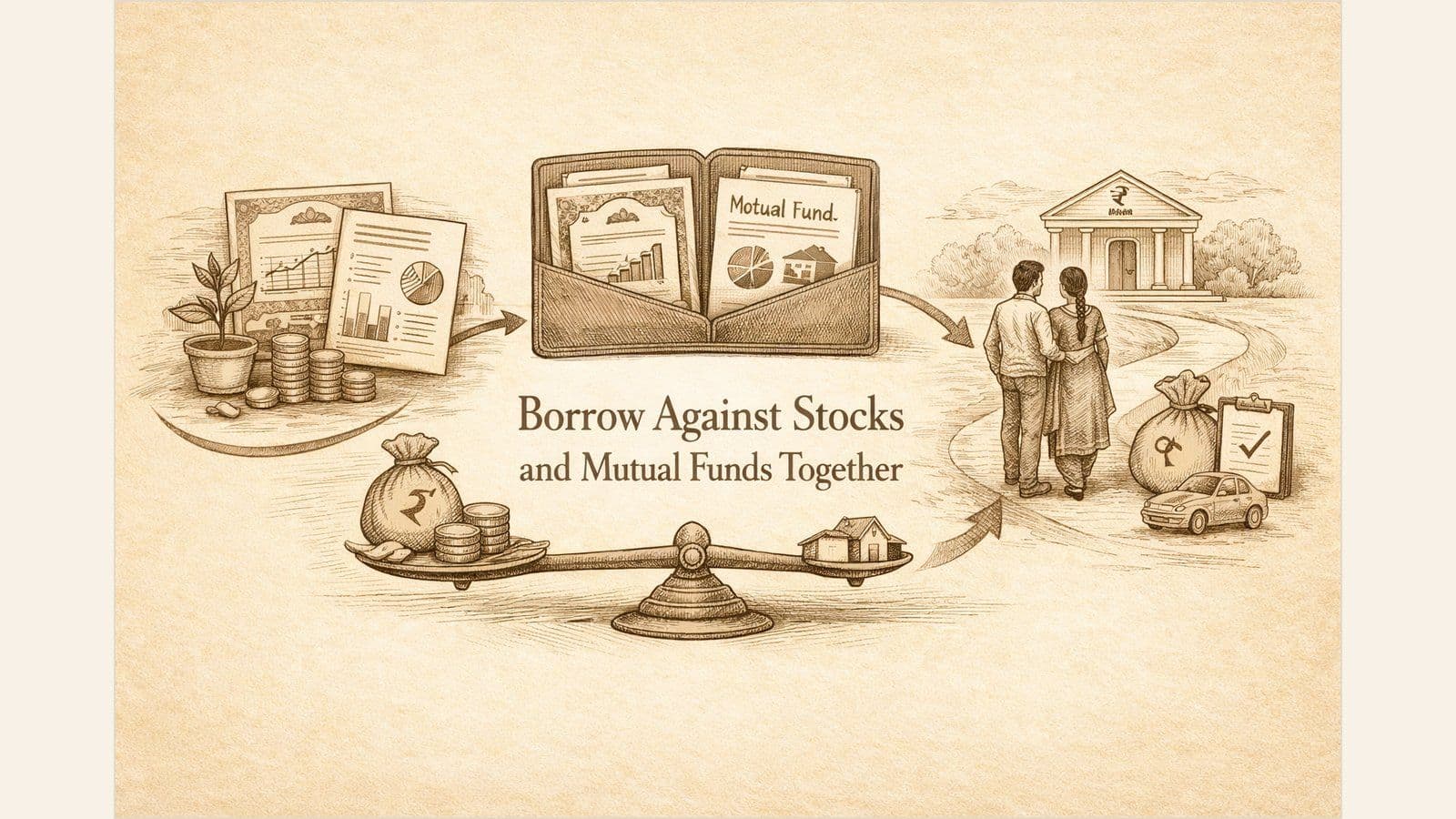
If your investments are split across stocks and mutual funds, a cash need can create an awkward question: do you have to sell something, or can the portfolio help you borrow without disturbing your long-term plan?
The useful answer is not “all investments qualify” or “sell first.” The useful answer is: check which holdings are eligible, understand the pledge terms, and compare borrowing with selling before you make a permanent portfolio move.
A mixed portfolio can still be a source of liquidity. But eligibility depends on the specific holdings and the lender or platform flow, so you should not assume every stock or mutual fund can automatically support a loan.
Key Takeaways
- A mixed portfolio does not automatically mean you must sell assets to raise cash.
- Eligibility depends on the specific stocks, mutual funds, and lender/platform rules.
- Borrowing can be better than selling when you need liquidity but still want the investments to remain part of your plan.
- Check charges, repayment comfort, collateral-value risk, and pledge-release rules before drawing money.
You may be able to borrow against eligible investments instead of selling them, but the first step is always eligibility.
Stocks and mutual funds are not all treated the same. Some holdings may qualify, some may not, and the amount you can borrow can vary based on the asset type, portfolio value, and lender rules. That is why a mixed portfolio should trigger a check, not a quick sale.
A portfolio-backed loan starts with what can safely be pledged, not with selling by default.
With Yenmo, eligible investors can check options across lending partners through one platform. That matters when your holdings are spread across different investment types and you want a cleaner way to understand what is usable for liquidity.
Mixed portfolios feel confusing because investors often think in terms of “my total investments,” while lenders think in terms of eligible collateral.
You may own a stock that is valuable but not eligible in a particular loan flow. You may own mutual funds that can be pledged, while other holdings need a different treatment. You may also have assets across brokers, demat accounts, or investment platforms.
Owning investments and being able to pledge them are related, but not identical.
That difference is important because it protects you from overestimating liquidity. If you need ₹3 lakh, for example, you should not assume every rupee of portfolio value can be turned into a borrowing limit. The right approach is to check eligibility first, then decide whether borrowing, partial selling, or another option fits.
Borrowing can be better than selling when the investment still belongs in your long-term plan.
If you sell stocks or redeem mutual funds for a cash need, you get certainty. But you also reduce the portfolio that was meant to compound or participate in future market movement. You may also need to consider tax, exit load for some funds, brokerage, or the difficulty of rebuilding the same position later.
Borrowing works differently. You use eligible investments as collateral, access cash, and aim to keep the asset in place while you repay. That can be valuable when the need is real but the portfolio should not be interrupted.
The cost of selling is not only today’s cash. It can be the future exposure you give up.
This is why the borrow-versus-sell comparison matters. If you need money but still believe in the investments, selling should not be the automatic answer. Yenmo’s loan against mutual fund calculator vs redemption calculator can help you think through that trade-off for mutual fund holdings.
Pledging is not the same as selling, but it does change flexibility.
When an eligible asset is pledged, it supports the loan. You should not treat pledged holdings like completely free holdings that can be moved, sold, or redeemed whenever you want. The asset may still move with the market, but it is also part of the borrowing arrangement.
Still invested does not mean unrestricted.
That distinction keeps the decision honest. Borrowing can preserve investment exposure, but it also creates a responsibility: repay comfortably, monitor the facility, and understand what happens if collateral value changes.
Use a practical framework rather than a single yes-or-no rule.
Start with eligibility. Do not plan your cash flow around assets until you know whether they can support borrowing in the platform or lender flow.
If an investment no longer fits your goals, selling may be reasonable. If you still want to hold it, borrowing deserves a closer look.
A credit-line style product is most useful when you borrow according to the actual need. With Yenmo’s loan-against-mutual-funds structure, interest is charged only on the amount withdrawn, not simply on the full eligible limit.
Market-linked collateral can move. Yenmo’s guidance is that borrowers should usually leave roughly a 10% buffer when withdrawing, so normal market movement is less likely to create a shortfall.
If portfolio value falls after you have already drawn money, the eligible amount can reduce. Lenders generally give about 7 days to fix a shortfall by repaying part of the outstanding amount or pledging more mutual funds.
Before you borrow, ask direct questions.
The safest borrowing decision is the one you understand before you tap the limit.
Yenmo highlights no hidden charges, no foreclosure charges, and no prepayment penalties in its core loan-against-mutual-funds offer. Still, review the terms shown to you before accepting any offer.
Selling may be better when repayment would be stressful, when the investment no longer fits your portfolio, or when you need total simplicity and immediate freedom over the asset.
Borrowing is not automatically superior just because you own investments. It works best when the cash need is manageable, the eligible holdings are suitable, and you are comfortable with the loan structure.
If you would need to withdraw the maximum available limit with no buffer, pause. A portfolio-backed loan should make your liquidity decision calmer, not more fragile.
Yenmo is built for investors who need liquidity but do not want selling to be the first answer.
For eligible mutual fund investors, Yenmo helps you pledge instead of redeeming, check eligibility through an app-led flow, and borrow while keeping the investment decision separate from the cash need. The trust ecosystem includes CAMS, KFin, NSDL, DigiLocker, lending partners such as Bajaj Finance, Tata Capital, and DSP Finance, and Y Combinator backing.
If your holdings include both stocks and mutual funds, start with a calm eligibility check. Then compare the cost of borrowing with the cost of selling the assets you still want to own.
You may be able to use eligible investments as collateral, but eligibility depends on the specific holdings and lender/platform rules. Check the exact eligible amount before planning your withdrawal.
No. Do not assume every holding qualifies. Eligibility can vary, so the app or lender flow should confirm what can actually be pledged.
Pledged investments can still be exposed to market movement because pledging is different from selling. But pledged assets are restricted while they support the loan.
If an investment no longer fits your portfolio, selling can be reasonable. Borrowing is more useful when you want to keep the asset invested.
The main risks are repayment pressure, interest cost, and collateral-value movement. Borrow only when the facility remains comfortable even if markets move.
A mixed portfolio should not push you into a rushed sale.
If you need cash, first check which stocks or mutual funds are eligible, what limit is available, and whether repayment is comfortable. Selling may still be right in some cases. But when you want to stay invested, borrowing against eligible holdings can be a smarter comparison.
Before you sell assets you still believe in, check your eligibility with Yenmo and see whether a pledge-backed option can solve the cash need with less portfolio disruption.