
Download the app by scanning the QR code or clicking the links below:


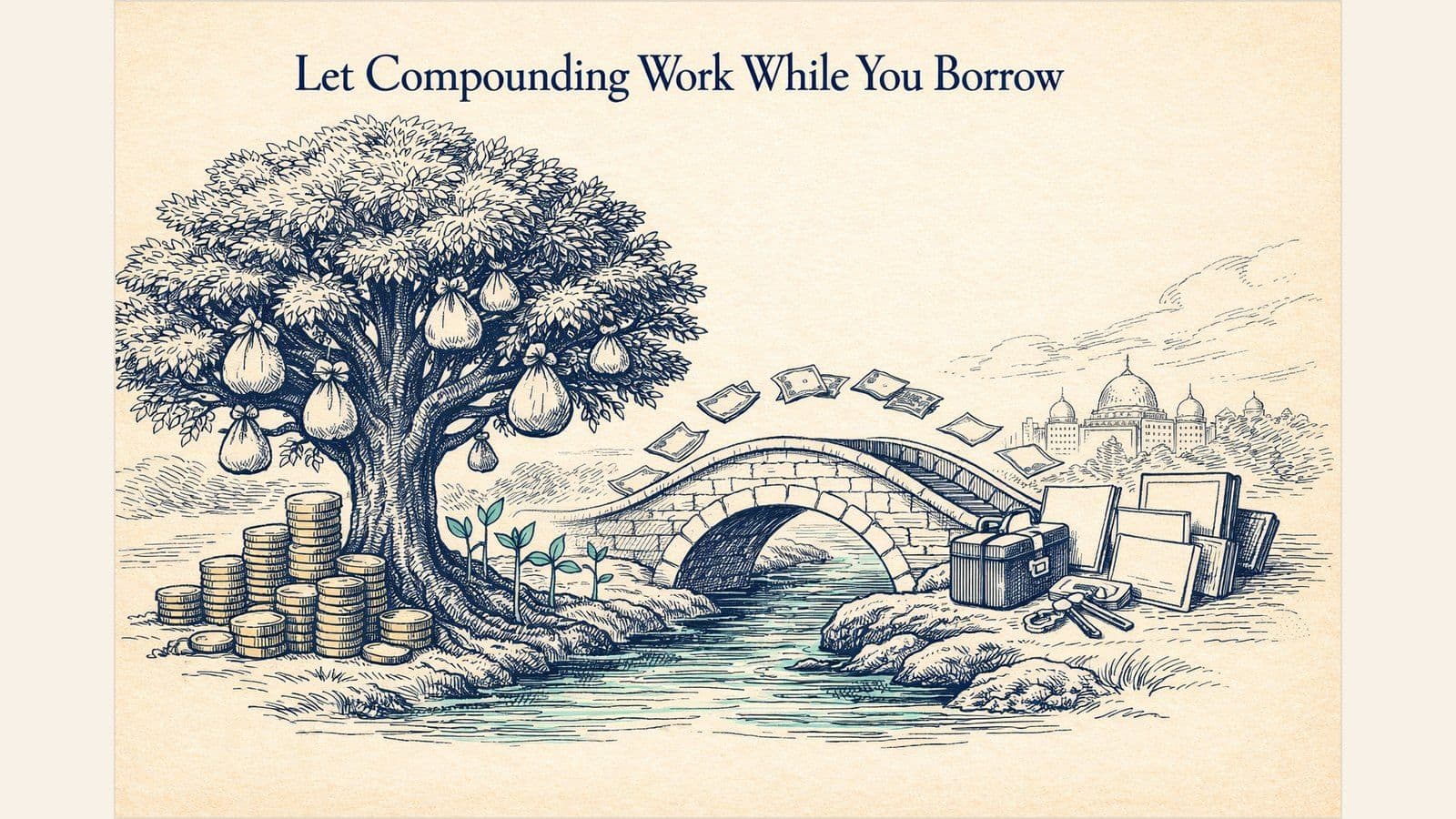
When you need cash, selling mutual funds can look like the cleanest option. There is no loan application, no interest meter, and no repayment schedule.
But that does not automatically make redemption the cheapest decision.
For a long-term investor, the real comparison is not loan interest versus nothing. It is loan interest versus the cost of taking money out of the market, interrupting compounding, and rebuilding the position later. That is where a loan against mutual funds can change the decision.
Key Takeaways
- Selling mutual funds gives you cash, but the redeemed units stop participating in future growth.
- Borrowing against mutual funds can help you access liquidity while eligible holdings remain invested.
- The right comparison is total decision cost: interest, taxes or exit loads if applicable, repayment fit, and missed compounding.
Compounding matters because mutual fund investing works best when money stays invested long enough to grow on itself. When you redeem units, you do not just raise cash. You also reduce the base that can keep compounding.
That cost is easy to ignore because it does not arrive as a bill. Loan interest is visible. Lost compounding is quieter. But for an investor who still believes in the fund and plans to keep investing, the invisible cost can be the more important one.
A loan against mutual funds is useful because it gives you another path: borrow against eligible holdings instead of selling them. If the cash need is manageable and temporary, that can preserve the option for your investments to keep working.
When you redeem mutual funds, you sell units and receive cash. The benefit is immediate liquidity. The trade-off is that those units are no longer part of your portfolio.
That can matter in three ways.
First, you may miss future market participation on the units you sold. No one can promise future returns, but the point of a long-term mutual fund plan is usually to stay invested through market cycles. Redemption breaks that exposure for the amount sold.
Second, you may face tax or exit-load consequences depending on the scheme and holding period. These details vary, so they should be checked before acting. The main point is that redemption is not always as costless as it feels.
Third, rebuilding the position later is harder than it sounds. Many investors plan to reinvest once cash flow improves. In real life, that money often gets absorbed by other expenses, and the portfolio stays smaller for longer.
Redemption solves today’s liquidity problem by reducing tomorrow’s invested base. That is the cost compounding forces you to notice.
Borrowing against mutual funds works differently because you pledge eligible units instead of redeeming them. The pledged holdings can remain invested while they support the loan.
That does not mean nothing changes. The units are pledged, so your ability to freely redeem or move them is restricted while the pledge is active. You also need to pay interest and manage repayment responsibly.
But the central advantage is clear: you are not automatically stepping out of the investment. You are using the portfolio to access liquidity while trying to keep the long-term investment plan intact.
With Yenmo, the structure is designed around this investor need. You can check eligibility digitally, borrow against eligible mutual funds, and pay interest only on the amount you withdraw. That makes the comparison more practical than taking a fixed lump-sum loan you may not fully need.
For a case-specific comparison, Yenmo’s loan against mutual fund calculator vs redemption calculator is a useful next step.
Loan interest is real. It should not be minimized. If you borrow, you should know what rate applies, how interest is charged, and whether repayment fits your cash flow.
But interest is only one side of the comparison. If selling interrupts a long-term investment, you should also consider what you might give up by removing money from the portfolio.
A simple decision frame helps:
If the answer points toward staying invested, borrowing against mutual funds deserves a serious look before redemption.
Market movement cuts both ways. Your pledged mutual funds can continue participating in the market, which means their value can rise or fall.
If portfolio value falls after you have already used part of the credit line, the eligible borrowing amount can reduce. Lenders generally give about 7 days to fix a shortfall by repaying part of the amount used or pledging more mutual funds.
That is why you should not withdraw the maximum limit just because it is available. A practical habit is to leave roughly a 10% buffer when withdrawing, so normal market movement is less likely to create pressure.
Compounding is a reason to consider borrowing. It is not a reason to borrow carelessly.
Borrowing is not automatically better than selling. The compounding argument becomes weaker when the loan itself creates stress or when the investment no longer fits your plan.
Redemption may be cleaner if you no longer want the fund, if the cash need is too large for a comfortable loan, or if repayment is uncertain. It may also be reasonable if you need finality more than flexibility.
The goal is not to avoid selling at any cost. The goal is to avoid selling by default when the investment still matters and a manageable loan can solve the cash need.
Yenmo is built for mutual fund investors who need liquidity but want to stay invested. The product lets you pledge eligible mutual funds instead of redeeming them, with an interest-only structure and no hidden charges in the core offer.
The trust layer matters because you are connecting a loan to your investments. Yenmo’s ecosystem includes CAMS, KFin, NSDL, DigiLocker, lending partners such as Bajaj Finance, Tata Capital, and DSP Finance, and Y Combinator backing.
If you are about to sell funds for a cash need, pause long enough to compare both routes. A few minutes of eligibility checking can help you see whether borrowing protects more of your long-term plan.
Not always. Selling avoids loan interest, but it can create tax or exit-load consequences and may interrupt future compounding. The better answer depends on your fund, holding period, cash need, and repayment ability.
Because today’s redemption can reduce the amount that stays invested for future growth. If the cash need is temporary, borrowing may help you solve the problem without permanently shrinking the portfolio.
Pledged mutual funds can continue earning returns because they are not redeemed. Their value can still move up or down with the market.
Redeeming may make sense if you no longer want the investment, if repayment would be stressful, or if the cash need is too large or uncertain for a loan to be sensible.
Compounding changes the borrow-versus-sell decision because redemption is not just a cash event. It is also an investment event.
If you still want your mutual funds to stay invested, selling may be the expensive option even when it feels simple. A loan against mutual funds can help you access cash while preserving the investment plan, as long as the numbers and repayment fit your situation.
Before you redeem, check your eligibility with Yenmo and compare the full cost of both choices.