
Download the app by scanning the QR code or clicking the links below:


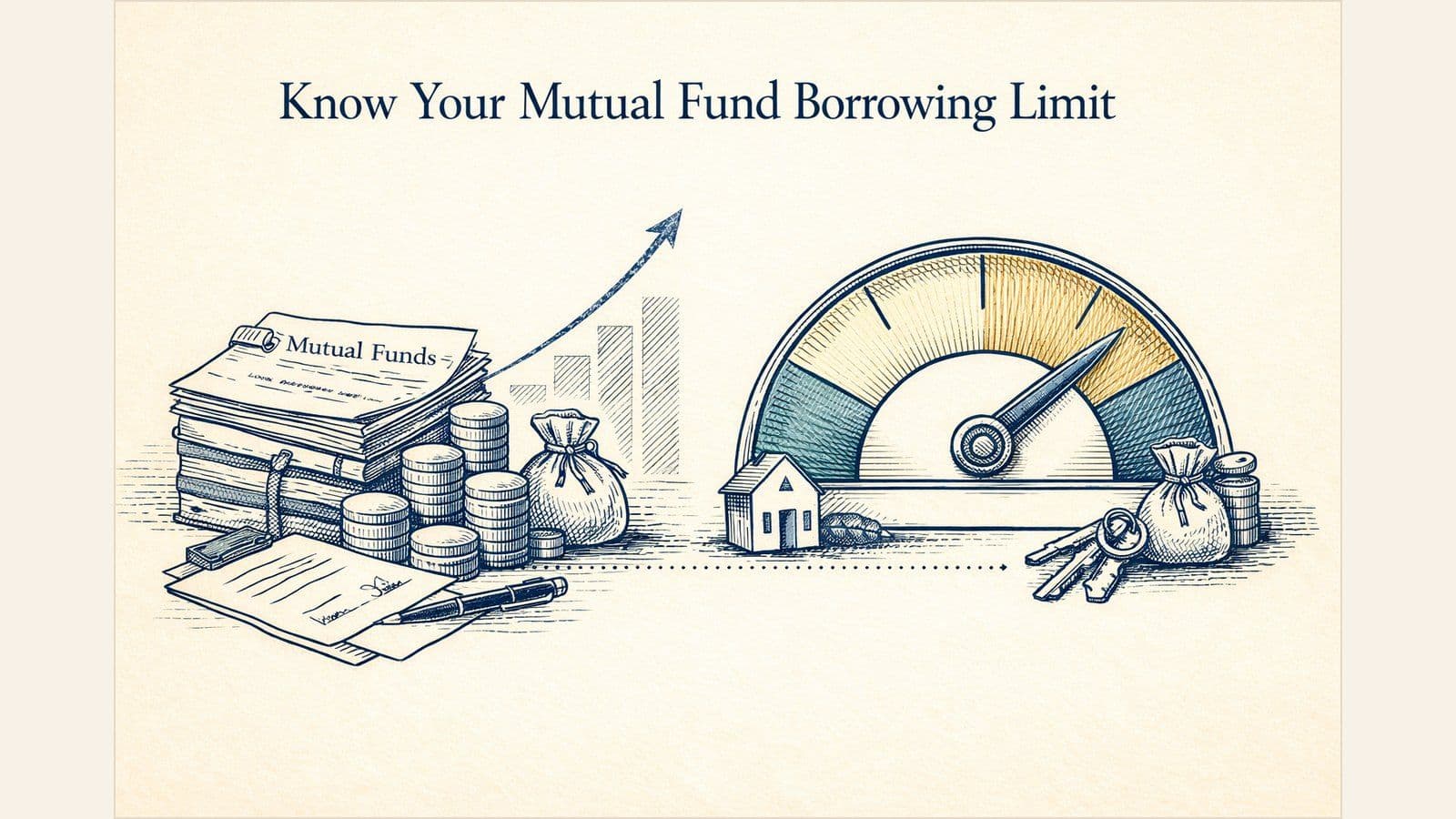
The amount you can borrow against mutual funds depends on the eligible value of your portfolio, the type of funds you hold, the lender’s rules, and current market value.
That means there is no honest one-size-fits-all number. Two investors with the same total portfolio value may receive different borrowing limits if their holdings, account setup, or lender eligibility differ.
The better question is not only “How much can I borrow?” It is also “How much should I withdraw while keeping the loan comfortable?”
Key Takeaways
- Your loan limit depends on eligible mutual fund value, not just your total portfolio value.
- Eligibility can vary by fund type, account setup, and lender rules.
- With a credit-line style structure, interest can apply only to the amount you withdraw, not the full eligible limit.
- The approved limit is a ceiling. A sensible withdrawal should leave room for market movement.
You can borrow based on the value of mutual fund units that are eligible to be pledged. The lender does not simply treat every rupee in every fund as immediately borrowable.
That is why generic estimates can mislead you. Your actual limit depends on the holdings you pledge and the rules used to assess them.
Yenmo helps by letting investors check eligibility across multiple lending partners through one platform. That is more useful than guessing from a broad online range, especially if your holdings are spread across accounts or brokers.
If you are trying to decide whether to redeem or borrow, eligibility is the first practical checkpoint. Once you know the amount available, the real comparison becomes clearer.
The borrowing amount is usually shaped by several factors working together.
Not every holding should be assumed eligible in the same way. Fund type, scheme eligibility, and lender policy can affect how much value can support a loan.
This is why a portfolio screenshot is not enough to know your borrowing capacity. A live eligibility check is better than a rough mental calculation.
Mutual fund values move with the market. Since the loan is supported by pledged units, the current value of those units matters.
If your portfolio value changes, the amount that can safely support borrowing may also change. That is normal for market-linked collateral.
Different lending partners can evaluate eligibility differently. This does not mean one answer is automatically right and another is wrong. It means the final offer depends on the lender’s risk rules and the eligible holdings.
Yenmo’s role is to make that discovery easier by helping you check eligibility through one platform instead of trying to decode every lender separately.
If your mutual funds are held through brokers, demat form, or multiple platforms, the operational setup can matter. The main question is whether the platform can support the pledge flow for those holdings.
That is a process question, not a reason to sell automatically.
Not necessarily.
Your approved limit tells you the maximum facility available under the offer. It does not mean you should use the full amount. A loan against mutual funds works best when you borrow deliberately.
With Yenmo’s credit-line style structure, interest is charged only on the amount actually withdrawn. If you are eligible for a larger limit but need only part of it, using only what you need can keep the cost lower.
It can also reduce stress. Mutual fund values can move, and using the full limit leaves less room if the portfolio value falls.
Eligibility answers how much you can borrow. Planning answers how much you should use.
A buffer helps protect you from normal market movement. Yenmo’s guidance is that borrowers should usually leave roughly a 10% buffer when withdrawing, so short-term changes in portfolio value are less likely to create a shortfall.
For example, suppose a portfolio worth ₹1,00,000 makes you eligible for ₹50,000 and you withdraw the full ₹50,000. If the portfolio later falls to ₹90,000, the eligible amount may revise to ₹45,000. In that case, you may need to repay ₹5,000 or pledge about ₹10,000 more in mutual funds.
If you had not withdrawn anything, the available withdrawal limit would simply revise. The pressure appears when the amount used exceeds the revised eligible amount.
That is why the safest habit is not to treat the limit as a target.
Yes. Because mutual funds are market-linked, the value supporting the loan can change.
This does not make the product unsafe by itself. It means you should understand how the loan behaves before withdrawing. If portfolio value falls after you have already used part of the line, lenders generally give about 7 days to fix a shortfall by repaying part of the outstanding amount or pledging more mutual funds.
The practical lesson is simple: borrow what you need, leave room for market movement, and keep repayment realistic.
With Yenmo’s credit-line style structure, interest is charged only on the amount you actually withdraw. That can be helpful if your approved limit is higher than your immediate need.
For example, if you are eligible for a larger amount but withdraw only a portion, the unused amount does not create interest cost under that structure. This is one reason a loan against mutual funds can be more flexible than a lump-sum loan.
It also means a higher approved limit can be useful without becoming expensive by default. The cost is tied to usage, not ego.
Once you know your eligible limit, compare borrowing with redemption on the full decision, not just speed.
Selling mutual funds gives cash, but it removes those units from the market. You may also need to consider taxes or exit loads depending on the fund and holding period. If the funds still belong in your long-term plan, redemption can be more costly than it appears.
Borrowing against mutual funds gives you liquidity while eligible holdings can remain invested. The trade-off is interest cost, pledge restrictions, and repayment responsibility.
If you want to compare the two routes more concretely, use Yenmo’s loan against mutual fund calculator vs redemption calculator.
Before you proceed, check these points:
These questions keep the decision practical. A loan against mutual funds is not just about getting the highest possible limit. It is about using your portfolio intelligently without selling it too early.
It depends on eligible mutual fund value, fund type, lender rules, and current market value. The most reliable way to know is to check eligibility for your actual portfolio.
No. Eligibility can vary by scheme, fund type, account setup, and lender policy. Do not assume every holding will be treated the same way.
With Yenmo’s credit-line style structure, interest is charged only on the amount you actually withdraw.
A buffer helps protect you if mutual fund values fall. Using the full limit leaves less room for market movement and can increase shortfall risk.
The amount you can borrow against mutual funds is not a fixed universal number. It depends on eligible holdings, portfolio value, lender rules, and how the pledge flow works for your account.
But the bigger point is control. Once you know your eligibility, you can decide whether borrowing lets you solve the cash need without selling investments you still want to hold.
Before you redeem, check your eligibility with Yenmo and compare the approved limit with the amount you actually need.