
Download the app by scanning the QR code or clicking the links below:


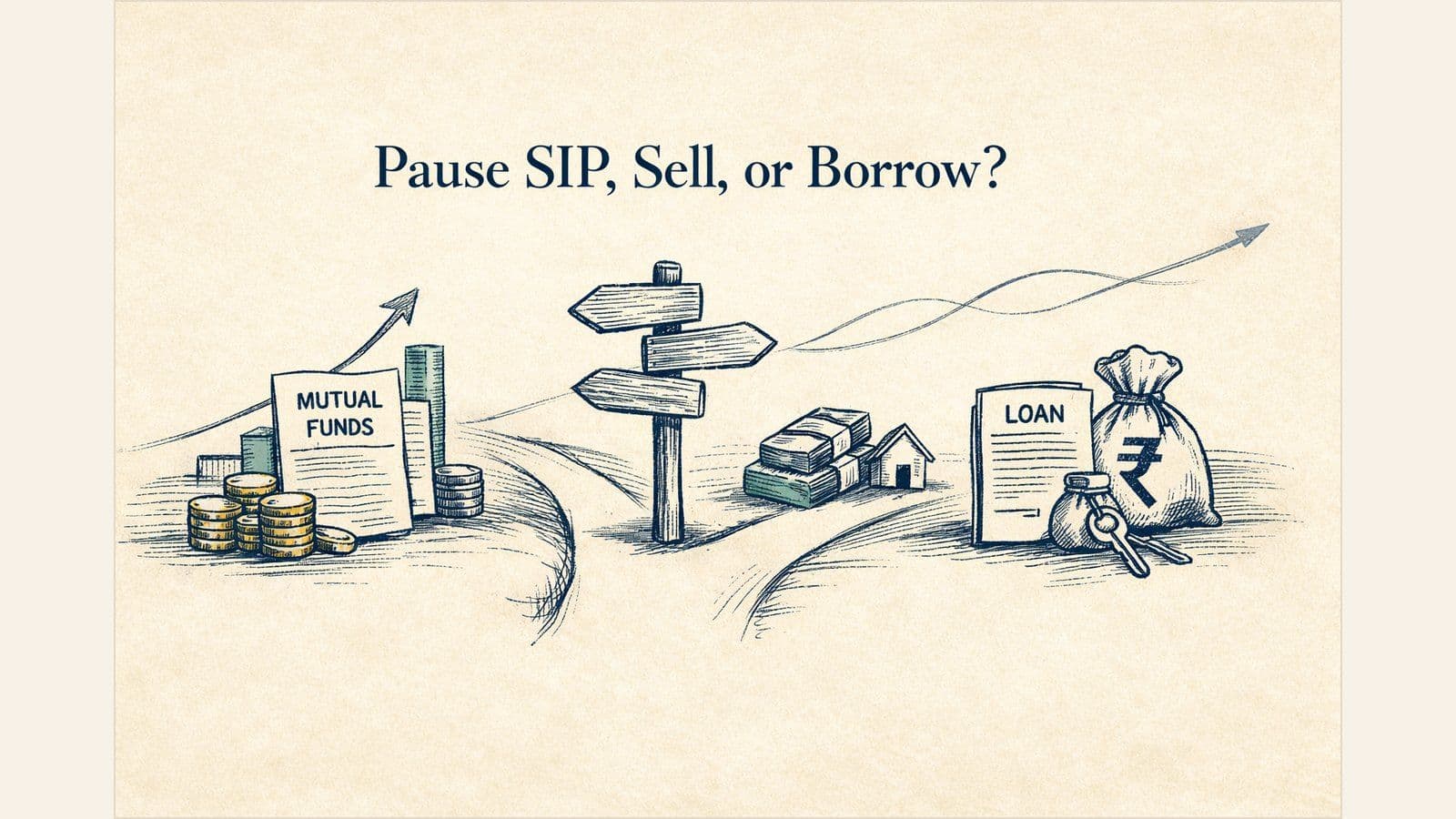
When cash gets tight, SIP investors usually see three options: pause the SIP, redeem mutual funds, or borrow against the portfolio.
They are not the same decision.
Pausing a SIP protects monthly cash flow, but it does not unlock money already invested. Redeeming gives immediate cash, but it reduces the portfolio you built. Borrowing against mutual funds can be the middle path when you need liquidity but still want your existing investments to stay invested.
Key Takeaways
- Pause SIPs when the issue is monthly cash-flow pressure, not an urgent lump-sum need.
- Redeem mutual funds when repayment would be stressful or you no longer want the investment.
- Consider borrowing against mutual funds when the cash need is temporary, repayment is manageable, and selling would interrupt a long-term plan.
- The best choice is the one that solves the cash need while disturbing the least valuable part of your financial plan.
If you need cash, first separate the problem into two parts: future contributions and existing investments.
Pausing your SIP affects future contributions. It gives you more cash every month, but it does not create a lump sum from the money already invested.
Redeeming mutual funds affects the existing corpus. It gives you cash now, but the units you sell stop participating in future returns.
Borrowing against mutual funds can help when you want to access liquidity without selling eligible holdings. You still take on interest cost and repayment responsibility, but you may preserve the portfolio base that you worked hard to build.
A cash crunch is easier to solve when you know which part of the plan you are willing to disturb.
Pausing a SIP makes sense when the problem is monthly cash flow.
For example, if your income has temporarily reduced or your monthly expenses have increased, a short SIP pause can create breathing room. You are not selling existing units. You are simply stopping new contributions for a while.
That can be sensible if the cash need is small and recurring. It may also be better than taking a loan for a problem that is really about monthly budgeting.
But a SIP pause has limits. If you need a larger amount immediately for a medical bill, business payment, home repair, or other urgent expense, pausing future instalments may not solve the problem fast enough.
Pausing a SIP gives monthly relief. It does not unlock the corpus you already built.
A short pause can be practical. An indefinite pause can quietly weaken your long-term plan.
The biggest risk is not one missed instalment. The bigger risk is that the SIP never restarts. Many investors pause with good intentions and then let the habit disappear into other expenses.
That matters because SIP investing works through discipline and time. If you stop adding to the portfolio for months without a restart plan, the cost may show up later as a smaller corpus than you expected.
So if you pause, make it deliberate. Decide why you are pausing, how long the pause should last, and what trigger will restart the SIP.
Redeeming can be the right answer when certainty matters more than preserving the investment.
If you cannot comfortably repay a loan, selling may be safer. If the cash need is too large or uncertain, redemption can remove repayment pressure. If the fund no longer fits your goals, selling may also be a reasonable portfolio decision rather than a forced cash decision.
The point is not to avoid redemption at any cost. The point is to avoid redeeming by default when you still want the investment and have a manageable alternative.
Before you sell, check whether taxes, exit load, or lost compounding change the real cost. Selling feels clean because there is no loan interest, but it can still be expensive if it removes money from the market earlier than planned.
Borrowing against mutual funds can make sense when you need cash but do not want to break the existing corpus.
Instead of redeeming units, you pledge eligible mutual funds as security for the loan. The pledged investments can remain invested, which means they can continue moving with the market while supporting the borrowing facility.
With Yenmo, the product is built around this investor situation: borrow without selling, check eligibility digitally, and pay interest only on the amount you withdraw. That can be useful when you need a specific amount now but do not want to disturb a larger portfolio.
This is not a reason to borrow carelessly. It is a reason to compare the full decision. If the cash need is temporary and repayment fits your situation, borrowing may protect more of your long-term plan than redemption.
Use a simple decision frame.
A SIP pause can be enough when you need to reduce monthly outflow and do not need a large lump sum. Keep the pause time-bound so the habit can restart.
For larger cash needs, pausing future instalments may be too slow. At that point, compare selling units with borrowing against eligible units.
The benefit of staying invested only helps if the loan remains manageable. If repayment would create stress, redemption may be the cleaner choice.
If you still believe in the mutual funds and the cash need is temporary, check whether borrowing can solve the need while keeping the portfolio intact.
For a side-by-side view, Yenmo’s loan against mutual fund calculator vs redemption calculator can help you think through the trade-off.
Sometimes the best answer is not only one move.
You may pause new SIPs briefly to create breathing room and borrow a smaller amount against existing holdings instead of redeeming a larger amount. Or you may redeem a small portion and keep the rest invested if borrowing would not feel comfortable.
The useful question is: how do you solve the cash need while causing the least long-term damage?
That question keeps the decision practical. You are not trying to protect every rupee of the portfolio no matter what. You are trying to avoid a rushed decision that permanently weakens a plan you still believe in.
Yenmo is for mutual fund investors who need liquidity but do not want selling to be the automatic answer.
The product lets eligible investors pledge mutual funds instead of redeeming them. It works like a credit-line style facility where interest is charged only on the amount withdrawn, and Yenmo highlights no hidden charges, no foreclosure charges, and no prepayment penalties in the core offer.
Trust also matters when a loan is connected to your investments. Yenmo’s ecosystem includes CAMS, KFin, NSDL, DigiLocker, lending partners such as Bajaj Finance, Tata Capital, and DSP Finance, and Y Combinator backing.
If you are thinking about stopping SIPs or selling units because of a cash need, check your options before you break the plan.
Pause SIPs if the problem is monthly cash-flow pressure and you do not need a large lump sum immediately. If you need cash now, pausing future instalments may not be enough.
They affect different parts of the plan. Pausing SIPs stops new contributions. Redeeming sells existing units. Redemption can be more damaging when you still want the invested corpus to keep working.
In many cases, borrowing against eligible existing holdings and continuing SIP discipline can be considered separately. Whether that is sensible depends on eligibility, repayment comfort, and your cash-flow situation.
Selling may be better when repayment would be stressful, the cash need is too uncertain, or the fund no longer fits your goals.
Pledged mutual funds can continue earning returns because they are not redeemed. Their value can still go up or down with the market.
A cash need does not automatically mean you should break your SIP habit or sell the portfolio you built.
Pause SIPs when monthly cash flow needs relief. Redeem when you need certainty or repayment would be unsafe. Consider borrowing against mutual funds when the need is temporary and you want your existing holdings to stay invested.
Before you redeem, check your eligibility with Yenmo and compare the full cost of disturbing your portfolio.