Download the app by scanning the QR code or clicking the links below:

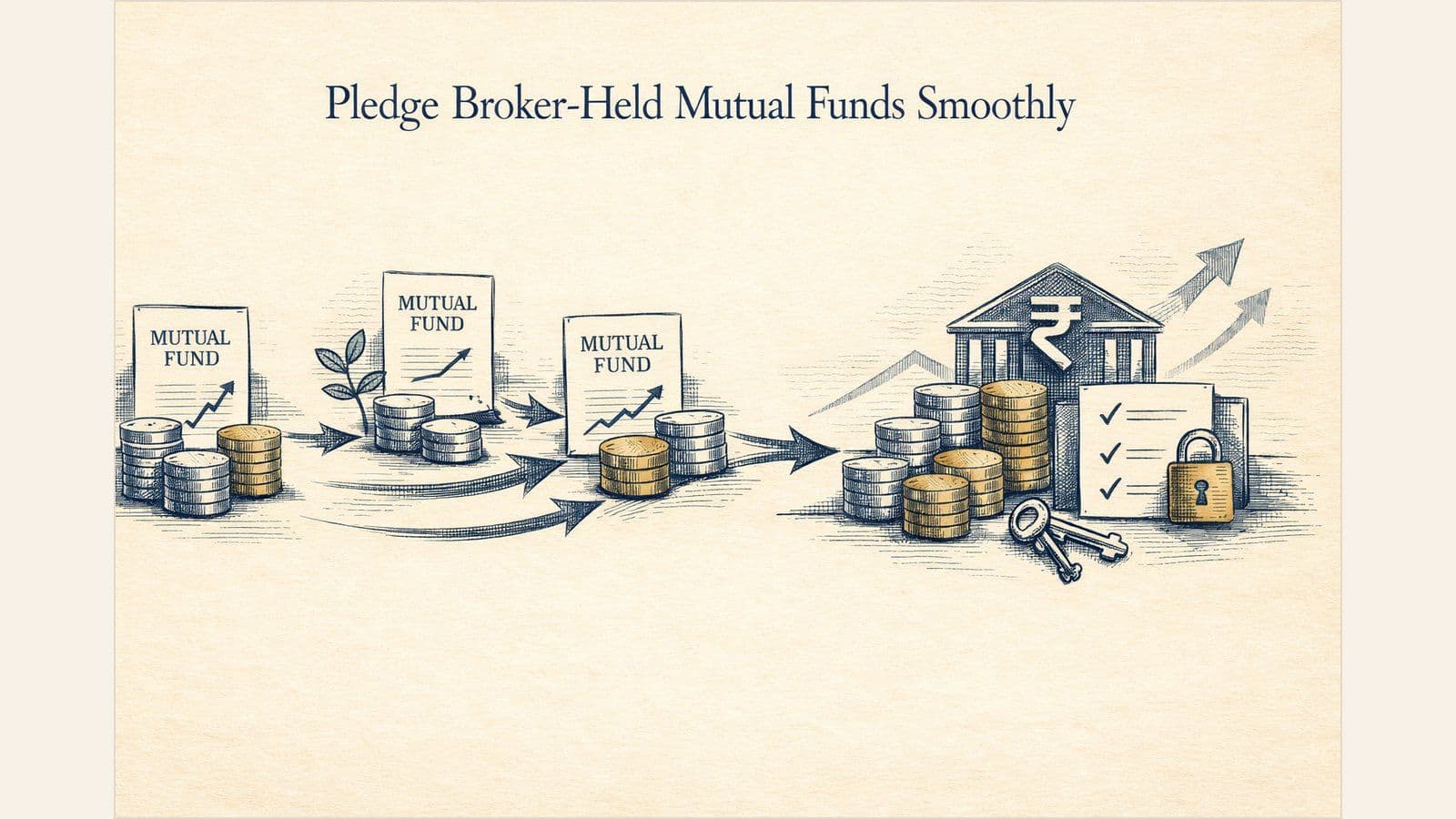
Many investors do not hold all their mutual funds in one neat place. You may have SIPs on one app, older holdings in another, and demat mutual funds through a broker like Zerodha or Groww.
So the natural question is: can those spread-out holdings still help you get a loan against mutual funds?
The answer is: potentially yes, but it depends on how the holdings are recorded, whether they are eligible, and how the pledge flow works for your specific portfolio. The smart move is to check eligibility instead of assuming every folio or broker-held unit can be pledged in the same way.
Key Takeaways
- Mutual funds held across platforms may still be useful for a loan against mutual funds if they are eligible and can be pledged correctly.
- Broker or app location is less important than the actual holding record, eligibility, and pledge infrastructure.
- Checking eligibility can help you avoid selling funds simply because your investments are spread across multiple apps.
Whether you can pledge a mutual fund holding depends on the underlying eligibility and pledge process, not just the name of the app where you see it.
If your funds are visible through Zerodha, Groww, Kuvera, or another platform, that does not automatically mean every unit is pledge-ready. It also does not automatically mean the holding is unusable. The right answer depends on the scheme, holding format, records, and lender/platform flow.
Yenmo is built for investors who already use digital investment platforms and want liquidity without selling their mutual funds. That makes spread-out holdings an important real-world use case, not an edge case.
For a broader category overview, start with Yenmo’s loan against mutual funds guide.
Most long-term investors do not build their portfolio in a perfectly organised way.
You may start SIPs on one platform, switch brokers later, buy direct funds somewhere else, and hold older investments in folio form. Over time, your portfolio becomes financially meaningful but operationally scattered.
That matters during a cash need. If you assume only one app’s holdings count, you may redeem funds unnecessarily even though a better pledge-backed option might be available.
A scattered portfolio can still be a useful portfolio. The question is whether the eligible holdings can be verified and pledged cleanly.
Demat mutual funds may be eligible for pledge depending on the platform, lender, and scheme-level rules.
The key is not the word “demat” by itself. The key is whether the units can be recognised, valued, and pledged through the relevant infrastructure. That is why a digital eligibility check is more useful than a generic yes-or-no answer.
If you specifically hold mutual funds through a demat account, Yenmo’s draft on loan against demat mutual funds should become a useful internal link once published.
Until then, treat this as a practical rule: do not redeem simply because the holding sits inside a broker account. Check whether it can be pledged first.
Before you make a borrowing decision, check four things.
First, check whether the mutual fund schemes are eligible. Not every holding is treated the same way.
Second, check whether your ownership and KYC records are clean. Mismatched phone numbers, email IDs, PAN details, or bank records can create avoidable friction.
Third, check whether the pledge can be completed through the required digital flow. The loan is only useful if the operational pledge step works.
Fourth, check the borrowing structure. A facility that charges interest only on what you withdraw can feel very different from a loan where the full amount immediately becomes an EMI burden.
When your holdings are scattered, selling may feel easier than organising them. But ease is not the same as cost.
Redeeming mutual funds can interrupt compounding and may create tax or exit-load consequences depending on the investment. It can also shrink the portfolio you were building for a longer-term goal.
Pledging eligible holdings gives you a different route. You can access liquidity while the pledged investments continue to participate in market movement. That is the central reason a loan against mutual funds exists.
If you are comparing the two routes, Yenmo’s loan against mutual fund calculator vs redemption calculator can help frame the trade-off.
That can still be useful.
You do not need every rupee of your portfolio to qualify for a borrowing route to be worth considering. If a meaningful portion is eligible, it may create enough liquidity to handle the immediate need while leaving the rest of your portfolio untouched.
This is also why checking eligibility matters. The answer may not be “all or nothing.” It may be “this part can support a line, this part cannot, and here is the limit you should consider.”
A good borrowing decision starts with that clarity.
It depends on the holding, eligibility, and pledge flow. Do not assume yes or no based only on the broker name. Check whether the specific funds can be pledged through the lender or platform flow.
The same principle applies. The app where you view the holding matters less than whether the eligible units can be verified and pledged correctly.
You may still be able to use eligible holdings, but the practical answer depends on the portfolio records and pledge process. A digital eligibility check is the cleanest way to know.
Do not move or redeem holdings only because you assume consolidation is required. First check eligibility and understand what can already be pledged.
Holding mutual funds across Zerodha, Groww, Kuvera, or other platforms should not automatically push you toward redemption.
The better question is whether your eligible holdings can be verified and pledged cleanly. If they can, a loan against mutual funds may help you access cash while keeping your investment plan intact.
Before you sell units just because your portfolio is spread out, check eligibility with Yenmo and compare the borrowing route against the real cost of redemption.